
Herbal Medicines That Actually Work
Plants have been used to make medicines for thousands of years, and new ones are still being discovered. Here are a few herbal medicines that actually work and the plant extracts with potent medicinal properties.
For thousands of years, humans have extracted the healing properties of plants. Although herbal remedies are frequently dismissed as pseudoscience, more than one-third of modern drugs are derived directly or indirectly from natural products such as plants, microorganisms, and animals.
Researchers from the Scripps Research Institute in California have discovered that a chemical extracted from the bark of the Galbulimima belgraveana tree has psychotropic effects that could aid in the treatment of depression and anxiety.
The tree can only be found in Papua New Guinea and northern Australia's remote rain forests and has long been used as a pain and fever remedy by indigenous people.
"This shows that Western medicine hasn't monopolized the market on new therapeutics; there are traditional medicines out there waiting to be studied," senior author Ryan Shenvi, PhD, a Scripps Research professor of chemistry, told reporters last week.
What other drugs can be found in plants?

Opium, which has been used to treat pain for over 4,000 years, is the most well-known example of a medical drug extracted from a plant species. Opiates derived from the opium poppy, such as morphine and codeine, have a powerful effect on the central nervous system.
Parkinson's disease is treated with velvet beans
For over 3,000 years, the velvet bean (Mucuna pruriens) has been used in Ayurvedic and Chinese medicine in India. Ancient texts describe how healers used bean extracts to treat Parkinson's disease by reducing tremors in patients.
According to new research, the velvet bean contains a compound called levodopa, which is currently used to treat Parkinson's disease.
Levodopa reduces tremors by increasing dopamine signals in brain areas that control movement.
Levodopa's modern history began in the early twentieth century, when the compound was synthesized by the Polish biochemist Casimir Funk. Decades later, in the 1960s, scientists discovered that levodopa could be used to effectively treat tremors in Parkinson's disease patients The drug revolutionised disease treatment and remains the gold standard for its treatment today.
Hawthorn could be used to treat cardiovascular disease in the future
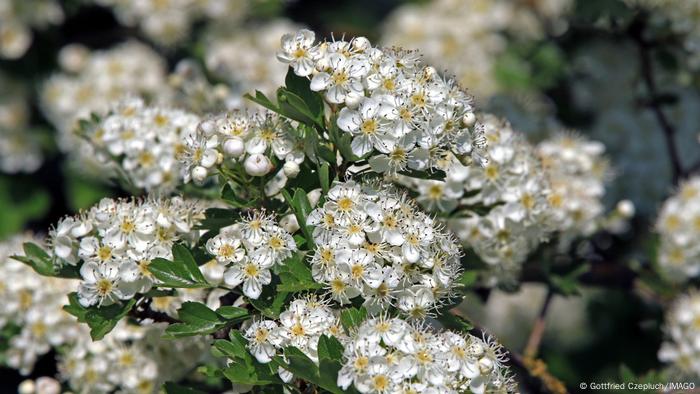
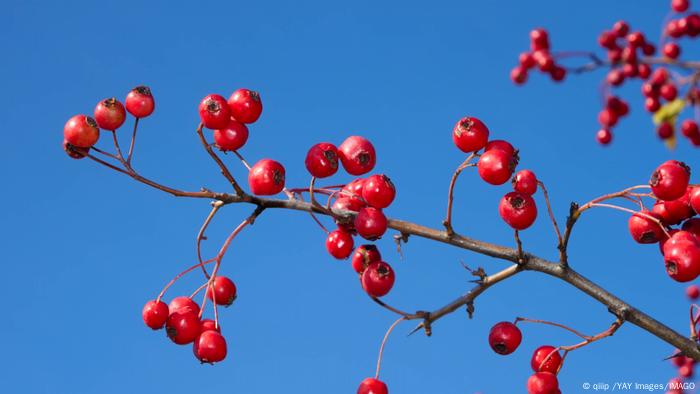
Clinical trials using current research standards discovered that hawthorn (Crataegus spp) lowers blood pressure and may be useful in the treatment of cardiovascular disease. Hawthorn berries contain compounds with antioxidant activity, such as bioflavonoids and proanthocyanins.
Hawthorn's medicinal properties were first noted by Greek physician Dioscorides in the first century, and by Tang-Ben-Cao in ancient Chinese medicine in the seventh century.
Hawthorn extracts are not yet suitable for general medical use — studies are ongoing, and more rigorous research is required to assess the long-term safety of hawthorn extracts to treat diseases.
The bark of the Pacific yew tree has cancer-fighting properties.
In European mythology, yew trees have a special place in medicine. The tree's most poisonous parts are associated with both death and immortality. In Macbeth, the Third Witch mentions "slips of yew slivered in the moon's eclipse" (Macbeth Act 4, Scene 1).
However, it is the Pacific yew tree (Taxus brevifolia) that has the most beneficial medicinal properties in North America.
Taxels were discovered in the bark of the tree by scientists in the 1960s. Paclitaxel, one of these taxels, has been developed into an effective cancer treatment drug. Paclitaxel can prevent cancer cells from dividing, preventing the disease from spreading further.

The miracle drug derived from Willow bark
Willow bark is another long-used traditional medicine. The bark was used to treat pain 4,000 years ago in ancient Sumer and Egypt, and it has remained a staple of medicine ever since.
Willow bark contains a compound known as salicin, which was later used to develop aspirin, the world's most widely used drug.
Aspirin has a variety of medical benefits, including pain relief, fever reduction, and stroke prevention. It was first widely used to treat high temperatures during the 1918 flu pandemic.


No comments:
Post a Comment