Follow us

social

Sunday, May 29, 2022

Treating Diabetes Without Medication

May 29, 2022 0

Treating Diabetes Without Medication


Treating Diabetes Without Medication

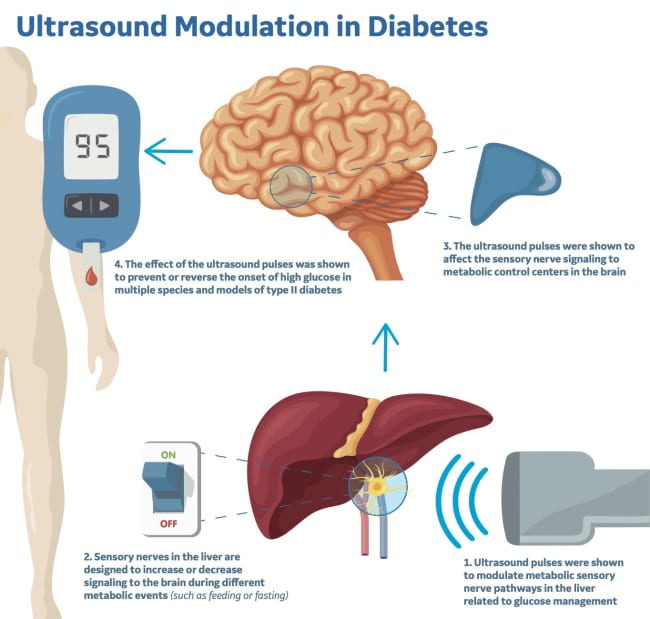
In three different preclinical models, a multi-institutional team led by Yale School of Medicine (YSM) demonstrated the ability to use ultrasound to stimulate specific neurometabolic pathways in the body treating diabetes without medication and to prevent or reverse the onset of type 2 diabetes. The findings were published in Nature Biomedical Engineering by the team, which included Raimund Herzog's, MD, MHS, lab at YSM.

The researchers are now conducting human feasibility trials with type 2 diabetic subjects, bringing medicine one step closer to the day when diabetes will no longer be monitored and managed with blood sugar tests, insulin injections, and drug treatments. 

The studies' goal is to find a long-term treatment for type 2 diabetes that will alleviate and possibly reverse the disease.


Millions of people worldwide suffer from type 2 diabetes. The long-term condition causes an excess of sugar to circulate in the bloodstream. Diabetes is a leading cause of blindness, kidney failure, heart attacks, stroke, and amputation of lower limbs.


Herzog, an associate professor (endocrinology) in the Department of Internal Medicine at YSM and a member of the NIH-funded Yale Diabetes Research Center, and his colleagues put the findings to the test The magnitude of the effect of ultrasound therapy on blood glucose levels.

 "Even though we have a wide range of anti-diabetic medications to treat high glucose levels, we are always looking for new ways to improve insulin sensitivity in diabetes," Herzog said.


"Unfortunately, there are currently only a few drugs available that lower insulin levels," Herzog added. "If our ongoing clinical trials confirm the promise of the preclinical studies reported in this paper, and ultrasound can be used to lower both insulin and glucose levels, ultrasound neuromodulation would represent an exciting and completely novel addition to our patients' current treatment options."

The findings are a significant step forward in the field of bioelectronic medicine, which is looking into new ways to treat chronic diseases like diabetes by using novel medical devices to modulate the body's nervous system. 

GE Research has been working on a novel, non-invasive stimulation technique that uses ultrasound to stimulate specific neural pathways within organs associated with disease for the past six years.


Following the reported preclinical studies, the collaborators have been involved in additional studies to investigate the effects of alternative dosing, such as the type of ultrasound pulse and treatment duration. The team is expected to release findings from those studies later this year.


YSM is part of a team led by GE Research that also includes the Feinstein Institutes for Medical Research Albany Medical College and UCLA's Samueli School of Engineering


Diabetes research reported in Nature Biomedical Engineering was funded in part by the Defense Advanced Research Projects Agency's Biological Technologies Office (BTO) (DARPA).


The Section of Endocrinology and Metabolism at Yale University works to improve the health of people with endocrine and metabolic diseases by advancing scientific knowledge, applying new information to patient care, and training the next generation of physicians and scientists to be leaders in the field.
search tags

treating diabetes without medication
type 2 diabetes without medication
how to treat diabetes without meds
diabetes control without medication
type 2 diabetes treatment without medication
type 2 diabetes controlled without medication

Saturday, May 28, 2022

Vitamin C a Powerful Natural Anti-Oxidant to stop aging

May 28, 2022 0


Vitamin C a Powerful Natural Anti-Oxidant to stop aging


Vitamin C a Powerful Natural Anti-Oxidant to stop aging


Antioxidants, with their free-radical-scavenging abilities and cellular protective properties, are the cheat code for adding years to your life. One nutrient in particular is an important member of the longevity club. Vitamin C a powerful natural anti-oxidant to stop aging is now available.

Vitamin C is a powerful antioxidant

Vitamin C has long been recognized as an essential nutrient for skin health and immune function, but it turns out that its antioxidant activity, among other things, plays a significant role in these properties.


Vitamin C, as the body's primary water-soluble antioxidant, promotes healthy skin, immune response, cellular resilience, cardiovascular health, cognitive function, and other benefits.


"Vitamin C acts as an antioxidant throughout the body—found it's in the blood, body fluids, and all of your cells and tissues,"* says Alexander Michels, Ph.D., clinical research coordinator at the Linus Pauling Institute.


Vitamin C, unlike fat-soluble antioxidants, performs its free-radical-scavenging duties in the intracellular and extracellular fluid (i.e., inside and outside of cells) rather than the cell membrane.

By combating free radicals and reactive oxygen species (ROS), vitamin C protects an impressive, diverse, and absolutely vital array of enzymes, molecules, and complex compounds in the body, such as proteins, lipids, carbohydrates, and nucleic acids (DNA and RNA).


Vitamin C's role in vitamin E recycling

As if all of that antioxidant action wasn't enough, vitamin C also aids in the restoration of other important antioxidants. Vitamin C, in particular, has the ability to regenerate fat-soluble vitamin E after it has been oxidised.*

"Vitamin E can keep parts of our cell membranes from oxidizing, but it also gets oxidized, meaning the vitamin E molecules lose electrons." To become functional again, the vitamin E molecular requires an electron from somewhere.

Vitamin E, as the most powerful radical-scavenging, fat-soluble antioxidant, plays an important role in balancing oxidative stress, stabilizing the cell membrane and overall structure, and supporting immune response. In other words, we require vitamin E, which necessitates the regeneration support provided by vitamin C.


The way our vitamin C supplement boosts antioxidant activity

What happens when you combine vitamin C, plant-based lipids (specifically rice bran), and a citrus bioflavonoid complex derived entirely from whole citrus fruits? Mindbodygreen's vitamin C potency+ contains a scientifically advanced, bioavailable formula. 

This next-generation vitamin C supplement contains ingredients that have been clinically proven to optimally raise vitamin C levels in the body, promote cellular retention, and provide the best daily antioxidant activity and oxidative stress protection balance throughout the body


This potent vitamin C supplement contains 1,000 milligrammes of vitamin C (the equivalent of 15 oranges!).

Furthermore, this vitamin C/lipid/citrus bioflavonoid trio works more effectively than other forms of vitamin C to combat free radicals.


The main point

When it comes to living a long and healthy life, vitamin C is an excellent nutrient to have on hand. Vitamin C is an essential vitamin that you should always have enough of because of its antioxidant power, role in vitamin E regeneration, and overall support of oxidative balance.


search tags

vitamin c
c vitamin serum
vitamins for skin
vitamin c capsules for skin
vitamin c for skin


A man from UK has received the world's first double hand transplant

May 28, 2022 0
A man from UK has received the world's first double hand transplant


A man from UK has received the world's first double hand transplant

Steven Gallagher, 48, is believed to be a man from UK that has received the world's first ever double hand transplant to help with his scleroderma.

A man in the United Kingdom appears to be the first to receive a double-hand transplant for his scleroderma condition. The patient and his new limbs are said to be doing well five months after the surgery.

According to the BBC, Steven Gallagher, 48, first noticed symptoms of scleroderma, a rare autoimmune disease that gradually tightens and scars the skin and other parts of the body, more than a decade ago. 

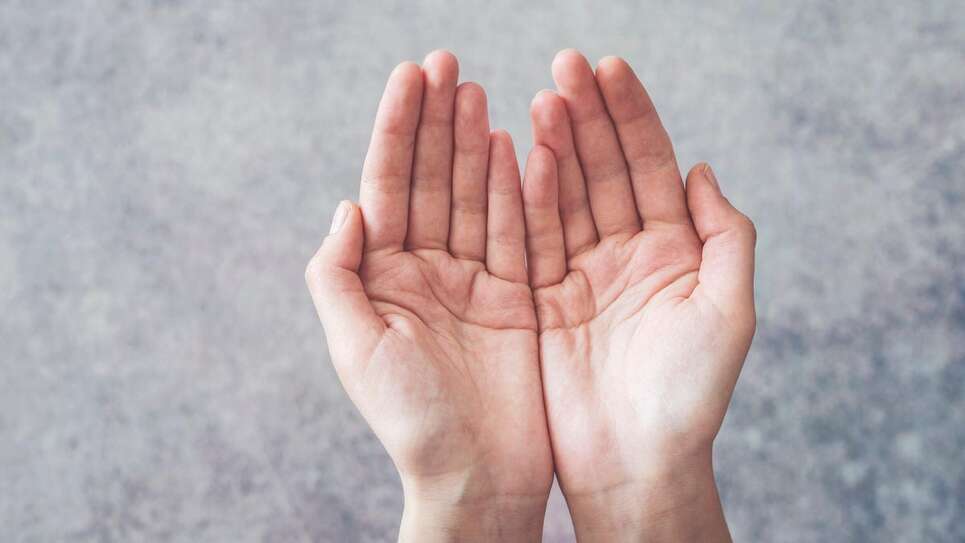
By his forties, the condition had caused his hands to permanently curl shut, causing excruciating pain. Gallagher agreed to the rarely performed surgery after consulting with doctors. In addition, in December 2021, he underwent a 12-hour procedure involving 30 medical professionals.

The first known human hand transplant occurred more than two decades ago, and approximately 100 transplants have been documented in the medical literature since then. However, this appears to be the first study done specifically for people with scleroderma. Gallagher is pleased with the results thus far.


"I woke up after the operation, and it was quite surreal," he told the BBC. "These hands are incredible; everything happened so quickly." I was able to move them as soon as I awoke from the operation."


Gallagher's donor hands have regained enough functionality after five months to allow him to turn on a faucet, grasp and fill a cup with water, and pet his dog. Perhaps most importantly, his hand pain has ceased.

However, the available data indicates that people are generally better off as a result. Donor hands are rarely rejected to the point of needing to be removed with proper therapy. 

Recipients usually regain enough function in their hands to perform most daily activities, and the procedure is generally well-received, even decades later. Immunosuppressant use and cost reductions may make this type of procedure more feasible in the future.


Gallagher, for one, hopes that he will soon be able to find work and enjoy other activities again.

"It's given me a fresh start," he said. "I'm still having difficulty right now, but things are getting better with the physio and therapists every week."


search tags

double hand transplant

face and double hand transplant

face and hands transplant

face and hand transplant before and after


Monday, May 23, 2022

The first human got injected with the 'revolutionary' cancer-killing virus

May 23, 2022 0
The first human got injected with the 'revolutionary' cancer-killing virus

The first human got injected with the 'revolutionary' cancer-killing virus

According to scientists, the first human got injected with the 'revolutionary" cancer-killing virus, vaxinia that has previously been employed on animals. that has previously been successfully employed on animals.


According to BGR, scientists expect that the virus will boost the immune system's response to better combat cancer cells.

Vaxinia was created to kill cancer cells and has shown encouraging results in animal testing.

The researchers ensured that the virus was not only cancer-killing, but also able to make it more recognized to the immune system in this current trial. The vaccine is being studied in Phase 1 with 100 individuals who have already been diagnosed with a metastatic or advanced solid tumor, who have used at least two other treatments.


The drug will be given to two groups, one of which will receive a Vaccine and the other will receive a cancer-killing virus plus an immunotherapy drug. 


Since Phase 1 is generally about safety and proper dosing, they don't produce the desired results right away.

When scientists tested this virus on animals, it was able to reduce tumor size in experiments.

While successful animal testing does not guarantee success in human trials, scientists hope it will open up new avenues for the body to fight cancer. Trial will end in 2025.

search tags

medical revolution

revolutions medicine

revolution medicine

revolution of medicine

medicine revolution

Wow...Burn up to 617 calories in just 30 minutes

May 23, 2022 0


Summer is quickly approaching, and many people are hitting the gym to improve their fitness and confidence.


There are numerous videos that claim one exercise or method is superior to another and that you should never do another - but in general, any form of exercise that gets your body moving and your heart pumping is beneficial.


However, for those of you who are more concerned with getting results quickly, one expert claims that they have discovered that these exercises will help you burn the most calories in 30 minutes.


Breakingmuscle.com fitness experts evaluated a variety of exercises to determine the ten that burned the most calories. They calculated the number of calories burned by a 30-year-old male weighing 190 pounds (86 kilograms) and a 30-year-old female weighing 125 pounds (57 kilograms) while performing each of the exercises.


According to the new data, vertical climbers are the most effective exercise. In 30 minutes, men burned an average of 617 calories and women burned 389 calories.


Climbing, they claim, engages your entire body and is both a cardio and strength training exercise. The exercise works your hamstrings, glutes, quads, back, chest, core, and arms, and depending on your grip, it can target different upper body muscles as you progress. 


Using an overhand grip, as in a pull-up, will, for example, target more of your upper back. In contrast, if you use an underhand grip, similar to that used in a chin up, you will target your biceps.


An all-out effort stationary cycle is the second most effective exercise for burning calories. This exercise burns 451 calories for men and 285 calories for women in 30 minutes.


A stationary cycle is typically used to target quads and hamstrings in order to help build strength in your legs and lower body. When you pedal, your abdominal muscles contract to keep you balanced, engaging this core muscle as well.


Resistance strength training ranks third, burning 371 calories for men and 234 for women. This exercise targets major muscle groups such as the chest, back, legs, shoulders, biceps, triceps, and core, and it increases muscle strength by putting your muscles against a weight or force. Resistance training can be done with free weights, machines, resistance bands, or just your own body weight.


It can be difficult to find time for your exercise routine in today's fast-paced world. This study demonstrates the best exercises for burning calories in only 30 minutes and demonstrates that there are a variety of exercises and benefits to suit a wide range of people on their journey to better health.


The number of calories burned is a huge benefit of these exercises; however, they provide many other health benefits such as improving strength, mental well-being, and overall happiness. There is an exercise for everyone, and it is exciting to discover your perfect fit – or a variety of workouts.


5 Amazing Benefits of Taking Vitamin D Supplements After 50

May 23, 2022 0


1. Your bones may be stronger.

Osteoporosis risk increases with age. Approximately 10 million adults over the age of 50 have osteoporosis, and 34 million have low bone mass, also known as osteopenia. Fortunately, vitamin D supplementation has been linked to increased bone mineral density and a lower risk of developing osteoporosis (weaker bones).


Focusing on bone health is especially important for postmenopausal women, as the risk of fracture increases. And who wants to deal with a bone fracture when it can be avoided?


2. You may feel less depressed.

More than half of all depression cases appear later in life. Late-onset depression is associated with an increased risk of morbidity, an increased risk of suicide, decreased physical, cognitive, and social functioning, and greater self-neglect, all of which are linked to an increased risk of mortality.

Several vitamin D receptors in the brain that affect mood have been identified, suggesting that low vitamin D levels may be associated with cognitive decline and depression symptoms.

Low levels of serum vitamin D have been linked to an increased risk of late-life depression. Taking vitamin D supplements can help support healthy vitamin D levels, potentially lowering the risk of depression.


3. You may be less likely to develop cancer.

The most important risk factor for certain cancers is getting older. Cancer incidence rates rise steadily with age, implying that finding ways to reduce the risk as we age is critical.

According to the findings of a study published in the BMJ, high vitamin D levels are associated with a 20% lower risk of certain cancers in both men and women when compared to low vitamin D levels. If you take vitamin D supplements and your levels rise, you may notice a lower risk of certain cancers as well.


4. You might have normal blood pressure.

Low vitamin D levels have been linked to a variety of aging-related diseases, including hypertension. The risk of hypertension rises significantly with age.

Observational data have revealed a link between low vitamin D levels and an increased risk of high blood pressure and hypertension. So, one unexpected side effect of taking vitamin D supplements on a regular basis is lower blood pressure, though this does not mean you should ignore eating a healthy diet in general.


5. You could have a strong immune system.

The immune system of an elderly person gradually deteriorates. There is a link between low serum vitamin D levels and an increased risk of developing several immune-related diseases and disorders (including COVID-19). Along with washing your hands and following all of the CDC recommendations, ensuring your vitamin D levels are adequate may help you avoid getting sick.

Sunday, May 22, 2022

Why Acupuncture Is Going Mainstream in Medicine

May 22, 2022 0


When the narcotic dependence emergency started to flood in the U.S. about 10 years prior, Dr. Medhat Mikhael invested a ton of energy conversing with his patients about alternate ways of mending torment other than narcotics, from different kinds of meds to elective medicines.

As an agony the executives expert at MemorialCare Orange Coast Medical Center in Fountain Valley, Calif., he didn't expect to abandon the transient utilization of narcotics out and out, since they function admirably for post-careful torment. However, he needed to suggest a cure that was more secure regardless viable.

That ended up being needle therapy.


"Like any treatment, needle therapy doesn't work for everybody, except most of my patients who have attempted it have tracked down alleviation," he says. "At the point when I began investigating studies, I found how much proof there was behind this treatment, and that caused me to feel open to recommending it as another option or a supplement to torment medicine and different medicines."


That mix of recounted achievement, research-upheld results, and developing degree of receptiveness from the clinical local area are driving the prominence of needle therapy as a treatment. As indicated by a 2021 World Health Organization report, needle therapy is the most broadly utilized conventional medication practice universally, and it's getting some decent momentum in the U.S. In 2020, the Centers for Medicare and Medicaid administrations started covering needle therapy interestingly for ongoing low back torment.


In spite of the fact that researchers don't yet see every one of the subtleties of how it functions, research demonstrates it can essentially affect specific circumstances, and it shows guarantee for other people.


What is needle therapy?

The objective of needle therapy is a similar now as it was millennia prior when it was first evolved in China: reestablishing harmony to the body, says Kevin Menard, a games medication acupuncturist and Traditional Chinese Medicine specialist in Sag Harbor, New York.


The training depends on how energy, or qi, courses through the body along a progression of channels called meridians — like the manner in which nerves and vessels convey messages and blood all through each framework.


"As indicated by Chinese medication hypothesis, every meridian is connected with a particular organ, and setting slim needles at specific focuses along these meridians can impact specific changes in the body to reestablish homeostasis," says Menard. The needles aren't the sort you'd use to draw blood; they're extremely slim and adaptable, practically like pieces of wire.


Arrangement along the meridians is accepted to cause responses like sending more blood or lymphatic liquid to explicit organs or permitting muscles to deliver in a manner that lessens pressure on joints and bones. The needles may likewise invigorate nerves and change sensory system guideline to bring about an unwinding reaction, which assuages torment, Mikhael says.


Needle therapy is likewise remembered to invigorate the safe framework and control aggravation, Menard says, two impacts that can bring benefits all through the body. Contingent upon the condition or injury, alleviation could occur with only one therapy, yet it ordinarily takes a progression of meetings, Menard says, particularly in the event that an issue is perplexing or ongoing.


What the exploration says

Research on needle therapy has been broad, thus far, powerful proof backings its viability for some, however not all, conditions. As per one examination distributed in February 2022 in the BMJ that investigated in excess of 2,000 logical surveys of needle therapy treatments, the science is most grounded behind needle therapy's adequacy for post-stroke aphasia; neck, shoulder, and muscle torment; fibromyalgia torment; lactation issues after conveyance; lower back torment; vascular dementia side effects; and sensitivity side effects.


The National Institutes of Health (NIH) finds that needle therapy for help with discomfort will in general have the most proof, particularly for conditions that have become persistent like osteoarthritis and lower back torment, as well as pressure migraines. A survey of 11 clinical preliminaries likewise proposes that needle therapy might assist with side effects related with disease treatment, the NIH notes.


That has been a thriving area of interest for the field, says Sarah Weaver, an acupuncturist and back rub specialist at Northwestern Health Sciences University in Minnesota, which centers around integrative wellbeing callings, like needle therapy, chiropractic, and Traditional Chinese Medicine. For malignant growth patients, meetings there can zero in on decreasing queasiness, deadness, and shivering (called neuropathy), mind haze, low craving, intense and ongoing agony, and mind-set difficulties that accompany disease care.


"Frequently, individuals with malignant growth need to add correlative therapy that doesn't influence their chemotherapy or radiation, and that is where a choice like needle therapy can be useful," she says. "It's the explanation more medical services frameworks are bringing this therapy into their integrative consideration choices."


What's next in the field

Needle therapy is a long way from a demonstrated and acknowledged treatment for most circumstances — in any event, for the ones that show guarantee. That is partially in light of the fact that the investigations that help it are here and there not superior grade, and the field needs normalized conventions that would better permit it to be experimentally assessed, the new WHO report finds.


For example, one 2016 exploration audit dissected investigations taking a gander at needle therapy for substance misuse and habit. Among the 83 exploration articles remembered for the audit, the specialists found significant varieties in concentrate on quality, needle therapy recurrence, how long needles were left in the body during treatment, which focuses along the meridians were utilized, and other possibly significant elements. That made it challenging to assess how compelling the needle therapy truly was. The field additionally needs clear wording and all around acknowledged understanding about the area of needle therapy focuses, specialists contend.


Issues like these should be set out to get greater clearness, and to procure proposals from trustworthy associations later on. Global specialists in the field are pushing to make clinical preliminaries more thorough to demonstrate needle therapy's utility for patient consideration and to assist suppliers with taking on the accepted procedures as additional advantages become clear.


A few possible bearings for future investigations incorporate concentrating on how needle therapy might influence hormonal guideline, for example, mitigating hot glimmers in menopause or tending to feminine abnormality. Research demonstrates that the training can support estrogen and different chemicals, and needle therapy for gynecological issues is turning out to be more famous, says Menard. A few scientists are likewise centered around concentrating on needle therapy's effect on ripeness; a few little, primer examinations demonstrate its utilization might be connected to getting pregnant sooner and having improved results from IVF medicines.


Needle therapy for psychological wellness issues like despondency and uneasiness is another significant exploration course, particularly as far as what these issues mean for in general wellbeing. For instance, persistent agony has frequently been connected to burdensome side effects, so analysts are taking a gander at whether needle therapy can address both: an individual's aggravation and their downturn. Specialists are confident. A review distributed in 2020 in the diary Frontiers in Neurology found that individuals with headaches who did needle therapy therapies had a lower hazard of despondency and tension, and would in general utilize clinical benefits on rare occasions, contrasted with headache patients who didn't do needle therapy.


As the proof base extends, needle therapy will probably keep on filling in prominence. Despite the fact that needle therapy has been utilized for a really long time, just in the previous ten years has there been a seismic change in acknowledgment by both Western clinical specialists and patients, Menard says. Continuous exploration endeavors and expanded interest from wellbeing frameworks implies that the treatment might be essential for additional discussions like Mikhael had with his patients.


"By the day's end, specialists believe their patients should feel quite a bit improved, and many individuals are searching for non-drug ways for wellbeing," Menard says. "Contingent upon the condition, those little needles can have a gigantic effect." 

Six things this immunologist does every night to improve her sleep and strengthen her immune system: 'Exercising alone isn't enough.'

May 22, 2022 0
Six things this immunologist does every night to improve her sleep and strengthen her immune system: 'Exercising alone isn't enough.'

six things to improve sleep and immune system

We're still dealing with Covid-19 outbreaks more than two years after the pandemic began, which means that developing and maintaining a strong immune system should be a top priority.

As an immunologist and functional medicine physician, I always remind my patients that, while genetics, diet, and exercise all play a role in immune response, sleep is one of the most effective ways to prepare your body to fight infection.

Stress hormones can become dysregulated if you don't get enough sleep, affecting your weight, gut health, and immune defence.

Sleep: Rest your body while strengthening your immune system

Exercising alone will not result in adequate sleep.

I see patients who go to the gym every day and make sacrifices such as giving up alcohol or sugar but still can't sleep well.

In fact, 50 million Americans suffer from some form of sleep disorder, and one in every three adults in the United States sleeps less than the minimum recommended seven hours.

Unfortunately, this has a wide-ranging impact on our health. Sleep deprivation not only makes us tired the next day, but it also causes inflammation and raises our risk of disease. It has been linked to an increase in hypertension, heart disease, obesity, diabetes, depression, and cancer rates.


How to Get More Sleep

The good news is that once you start prioritizing sleep, your immune system will improve.

Here are the six things I do every night to get a good night's sleep:


1. Reduce your use of digital devices.

You might be surprised at how much time you waste surfing the web, watching TV, and mindlessly scrolling through your phone. After you've been honest with yourself about how you spend your time, consider how you can reduce non-essential activities and reassign time for sleep instead.

I also recommend putting your phone and computer in the same drawer every evening. Human behavior experts have discovered that being successful at making healthy lifestyle choices is less about innate willpower and more about creating a lifestyle that facilitates these decisions.

2. Create an ideal sleeping environment


Your bedroom should be your haven for rest. There's no need for pricey linens, a weighted blanket, or a cooling pad. A comfortable mattress, a good pillow, and soft bedding will suffice.


Cover any indicator lights on electronics in your bedroom with black electrical tape. Use blackout curtains if there are bright streetlights outside your window. Use a white noise machine to drown out traffic noise if you can hear it.


Finally, ensure that your bedroom is comfortable and cool (the optimal temperature for sleeping is around 65 degrees Fahrenheit or 18.3 degrees Celsius).


3. Relax the mind before going to bed


Constantly thinking about things that haven't happened — or may never happen — is a common cause of insomnia.

Meditation before bedtime is one way to relax your mind and body. Writing down your worries has been shown to help clear the mind of stressful thoughts so they don't keep you awake at night.

Breathing exercises can also be beneficial. When I'm feeling anxious, worried, or just a little tense, I use the 4-5-7 breath technique:

Sitting calmly, place the tip of your tongue near the back of your upper front teeth on the roof of your mouth and exhale with a "whoosh" sound.

Inhale through your nose for four seconds, hold your breath for seven seconds, and exhale through your nose for eight seconds.

Do this again and again at least for four rounds.


4. Try magnesium as an experiment


Because of its demonstrated ability to combat insomnia, magnesium is often referred to as the "relaxation" mineral.

You can always take magnesium supplements, but one of my favorite ways to get magnesium for sleep is to soak in a warm Epsom salt bath. The main component of Epsom salt is magnesium sulphate, which has a relaxing effect by penetrating your skin and muscles.
Even soaking in a warm bath can help you sleep faster.


5. Put on blue-blocking glasses


Blue light interferes with your body's ability to prepare for sleep by blocking melatonin, a hormone that makes you sleepy.

And, given the high levels of blue light in our homes (from smartphones, tablets, and computers), blue light-blocking glasses are a must for me. Wearing these glasses has been shown to improve sleep quality and reduce insomnia.

The best glasses have yellow or orange lenses and block a higher percentage of blue-spectrum light, some up to 90%. Swans wick glasses are my favorites, but there are several good manufacturers and prescription options as well.

6. Perform some light stretching


Stretching or restorative yoga before going to bed can help with pain, high blood pressure, restless leg syndrome, and anxiety. Just a few poses can activate your parasympathetic nervous system and improve your sleep.

Legs-up-the-wall poses are my favorite. The best part is that you can do this for merely about five minutes and you are done.


search tags

immunity booster
immune system
immune
boost your immune system
ways to boost immune system
improve immune system
strengthen immune system
stress and immune system
sleep and immune system
lack of sleep and immune system